Ask three tradespeople what they wear on the job and you may get three different one-piece answers: coveralls, bib overalls, and a shop coat all get called “overalls” in casual conversation. They are not interchangeable. Each covers a different part of the body, closes a different way, and suits a different mix of weather and movement. If you are outfitting a crew or ordering a custom run, choosing the wrong pattern is an expensive mistake to discover after a hundred units arrive. This guide compares the main options on the two things that actually decide comfort and cost: coverage and fabric weight.
Three coverage patterns, not one garment
The clearest way to think about work overalls is by how much of the body they wrap. Coveralls are the full solution, a single piece that runs from the collar to the ankles and covers the arms, leaving only the face, hands, and feet exposed. Bib overalls are trousers with a chest panel and shoulder straps; the legs and lower torso are covered, but the arms and upper back are open, so they are worn over whatever shirt the weather calls for. A third pattern, the shop coat or work jacket, inverts that logic and covers the torso and arms while leaving the legs in ordinary trousers. Most workwear decisions come down to picking which of these three coverage maps fits the hazard and the climate.
Coverage and closures decide the daily experience
Coveralls close with a single long zipper or button placket from collar to waist, which makes them fast to pull on over a base layer and fast to shed if something spills or heats up. That single-point entry is why mechanics, welders, painters, and cold-weather outdoor crews reach for them: full coverage protects skin and clothing from grease, sparks, overspray, and wind in one move. The tradeoff is that the sleeves and closed torso limit airflow, so a heavyweight coverall can feel stifling in summer.
Bib overalls take the opposite tradeoff. With no sleeves and an open back above the waist, they keep the arms completely free and let the wearer add or drop a tee, flannel, or hoodie as the temperature shifts through the day. Carpenters, farmers, and general laborers tend to prefer them for that mobility and for the chest and hip pockets that ride high and stay reachable when kneeling. What they give up is upper-body and arm protection, which is exactly what a welder or a painter cannot spare.
Fabric weight is the other half of the decision
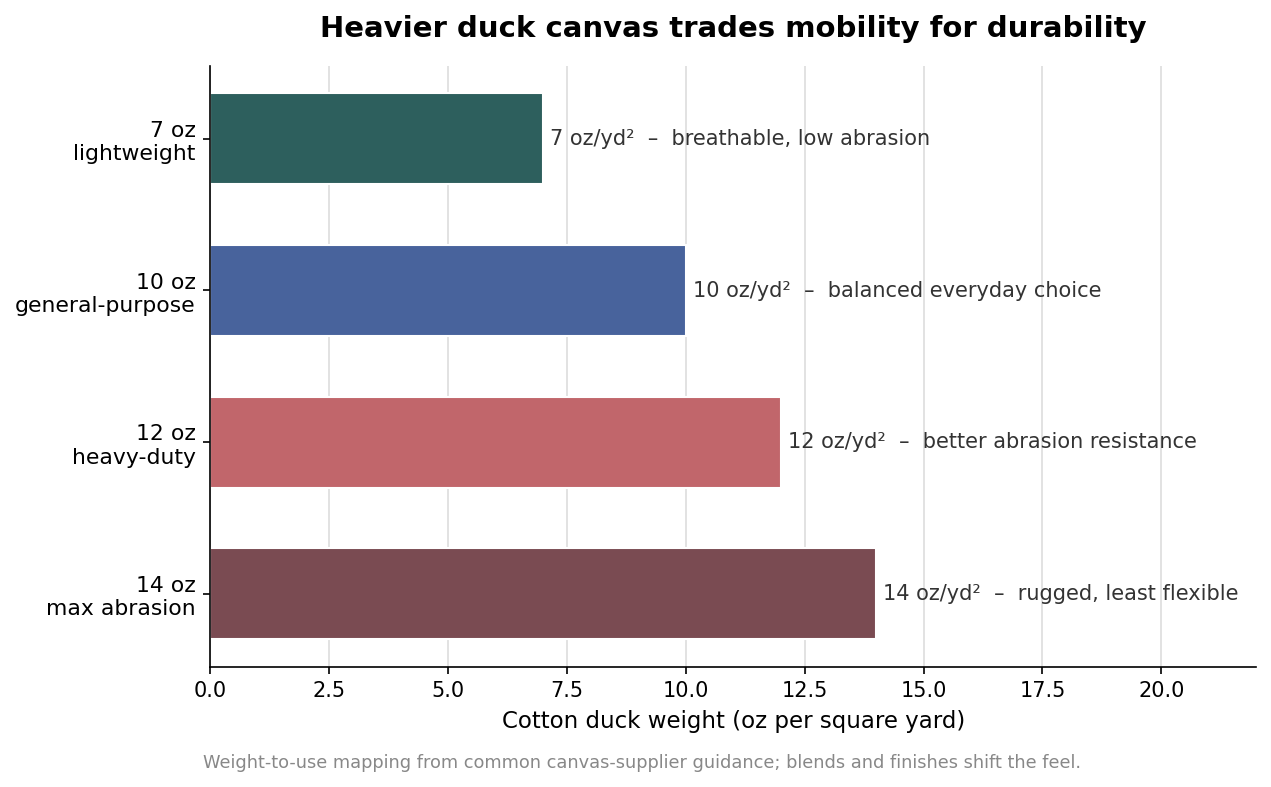
Coverage tells you the shape; fabric weight tells you how the garment will hold up and how it will feel. Most cotton work overalls are cut from duck canvas measured in ounces per square yard. A 7 oz duck is light and breathable but not built for daily abrasion. 10 oz is the popular general-purpose weight, balancing durability against flexibility for most trades. 12 oz steps up abrasion resistance for rougher work, and 14 oz is about maximum toughness at the cost of stiffness and mobility. Heavier is not automatically better: a 14 oz coverall worn for a task that never scuffs the fabric just tires the wearer out.
Many modern workwear garments use a 65/35 polyester-cotton blend rather than pure cotton duck. The polyester adds tear strength, cuts shrinkage, and dries faster, while the cotton keeps some breathability and takes dye well. Blends also tend to hold a printed or embroidered logo crisply through repeated industrial laundering, which matters if the garments will be washed on a commercial cycle rather than at home. One important exception: flame-resistant work requires purpose-built FR fabric, and adding an ordinary poly-cotton logo panel or thread can compromise that rating, so FR garments follow their own decorating rules.
Matching the garment to the job
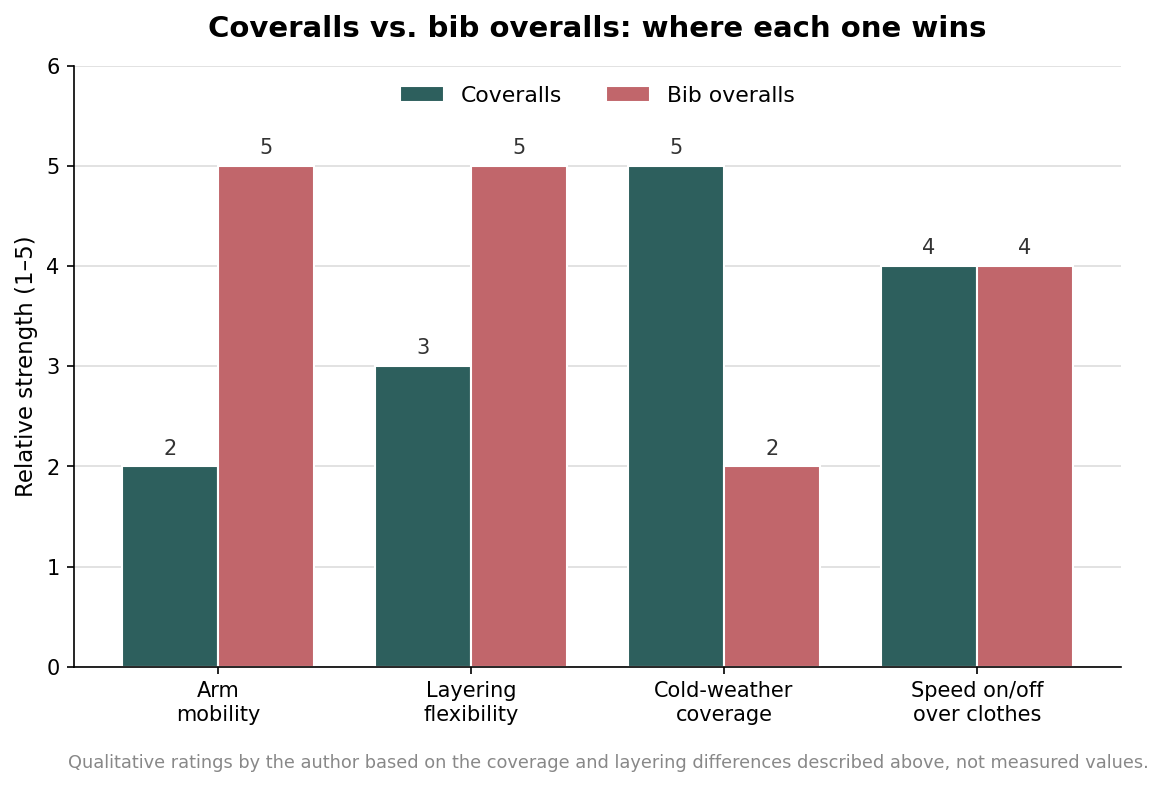
Put coverage and weight together and the choice usually resolves itself. For a welding, painting, or mechanical shop where the hazard touches the whole body, a coverall in a 10 to 12 oz fabric gives head-to-ankle protection that layers over normal clothes. For carpentry, farming, and general construction in mild to warm conditions, bib overalls in a 10 oz duck keep the arms free and let the crew regulate temperature with their own shirts. In genuinely cold outdoor work, insulated bib overalls or an insulated coverall in the heavier weights earn their bulk. The chart below sketches where each pattern tends to win, based on the coverage and layering differences above rather than on lab measurements.
Specifying and branding a custom run
Once the pattern and fabric are set, a few specification details prevent reorders. Size for how the garment is actually worn: coveralls and bibs are pulled on over other clothing and often over boots, so many buyers size up or choose a cut with an ankle zip or gusseted leg to clear footwear. Confirm inseam and torso length separately from waist, because a crew of the same waist size can vary widely in height. For decoration, embroidery survives industrial laundering best and reads well on the chest panel of a bib or the left chest of a coverall, while screen or heat-applied prints suit larger back logos on non-FR fabric. Decide early whether names or numbers are needed, since individualized garments change how a bulk order is produced and priced. Order a size-run sample set before committing to a full production quantity; trying the actual fabric weight on the actual bodies that will wear it is the cheapest insurance a workwear order can buy.