Ordering a run of custom bib overalls for a crew is not the same as buying a pair off a rack. Get the fabric weight, fit, and decoration method right and you have a uniform that lasts years and advertises the business on every job site. Get them wrong and you have a box of overalls that are too hot, too flimsy, or printed with a logo that cracks off in a season. This walkthrough covers the decisions in the order you actually have to make them.
First decide: bib overalls or coveralls
The two get lumped together but they solve different problems. Bib overalls are trousers with an integrated chest panel and adjustable shoulder straps, leaving the arms and upper back open. That makes them cooler, easier to move in, and simple to layer over whatever shirt the weather calls for, which is why carpenters, farmers, and framers reach for them. Coveralls enclose the whole body from collar to ankle, arms included, so they shine when the job is about protecting what is underneath, from paint and grime to cold wind, or when a worker needs to strip the whole layer off at the end of a shift. As a rule, choose bibs when the work is warm or involves constant bending and reaching, and coveralls when full coverage or maximum warmth matters more than ventilation.
Pick the fabric and its weight
Workwear overalls are built mostly from cotton duck canvas or denim, and the number that matters is the fabric weight in ounces per square yard. Lighter duck around 8 ounces breathes better and suits summer trades, midweight around 10 ounces is a good all-rounder, and the classic heavy-work standard is 12 ounce duck, stiff at first but extremely durable once broken in. Denim overalls land in a similar range. For cold-weather work, the shell stays around that 12 ounce mark but gains a quilted or flannel lining, which adds warmth at the cost of bulk. The chart below lays out the typical weights so you can match cloth to conditions rather than guessing.
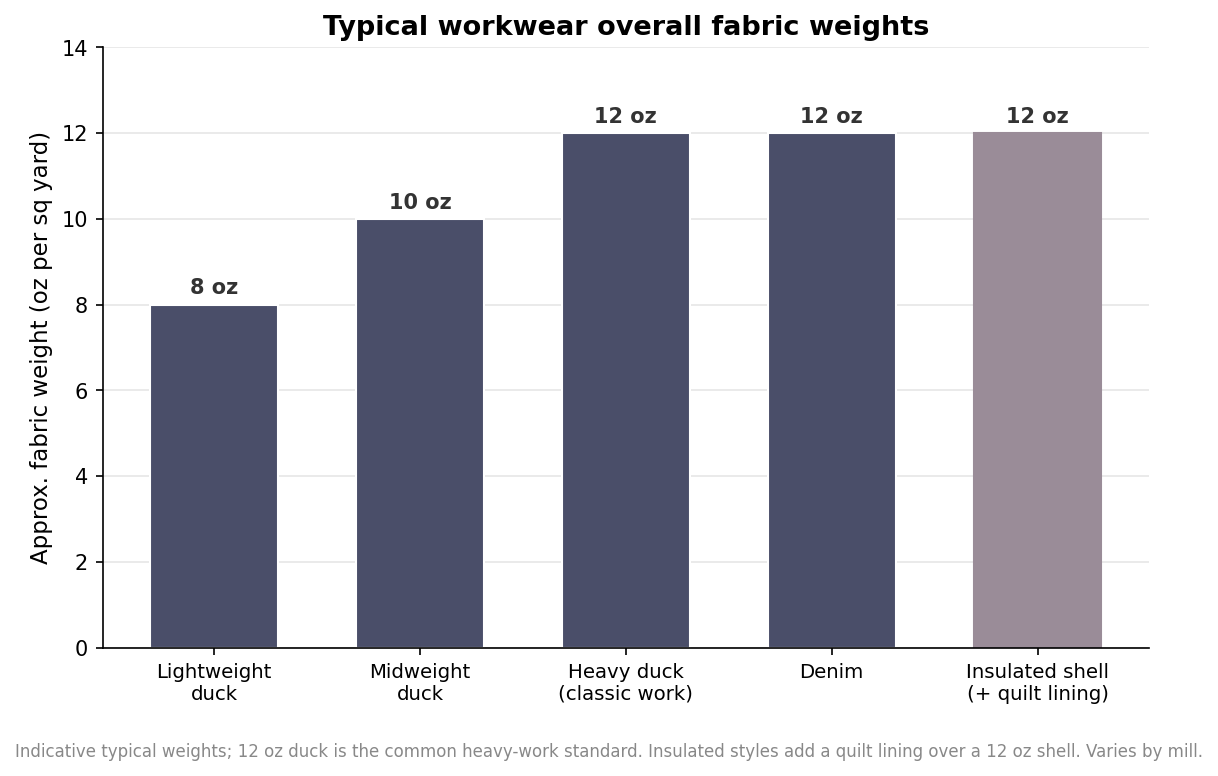
Weight is a genuine trade-off, not a “heavier is better” scale. A 12 ounce unlined duck bib is miserable in July, while an 8 ounce pair will not survive a welding shop. Buy for the season and the trade, and if the crew works year-round, plan on two builds rather than one compromise.
Get the fit and features specified
Fit is where custom orders most often go sideways. Men’s work bibs are typically sized by waist and inseam, the same as trousers, rather than a vague small-to-extra-large run, so collect actual waist and inseam measurements from the crew before ordering instead of guessing sizes. Adjustable side buttons and elastic-back or suspender-style straps absorb a lot of variation, which is why bibs forgive body shape better than fitted pants, but the base size still has to be close. While you are speccing, decide which working features you need: reinforced double knees for anyone who kneels, a hammer loop and rule pocket for the trades that use them, and multiple bib and hip pockets sized to real tools. Every added feature is worth confirming on the sample, because a pocket that will not hold a specific tool is a daily annoyance multiplied across the crew.
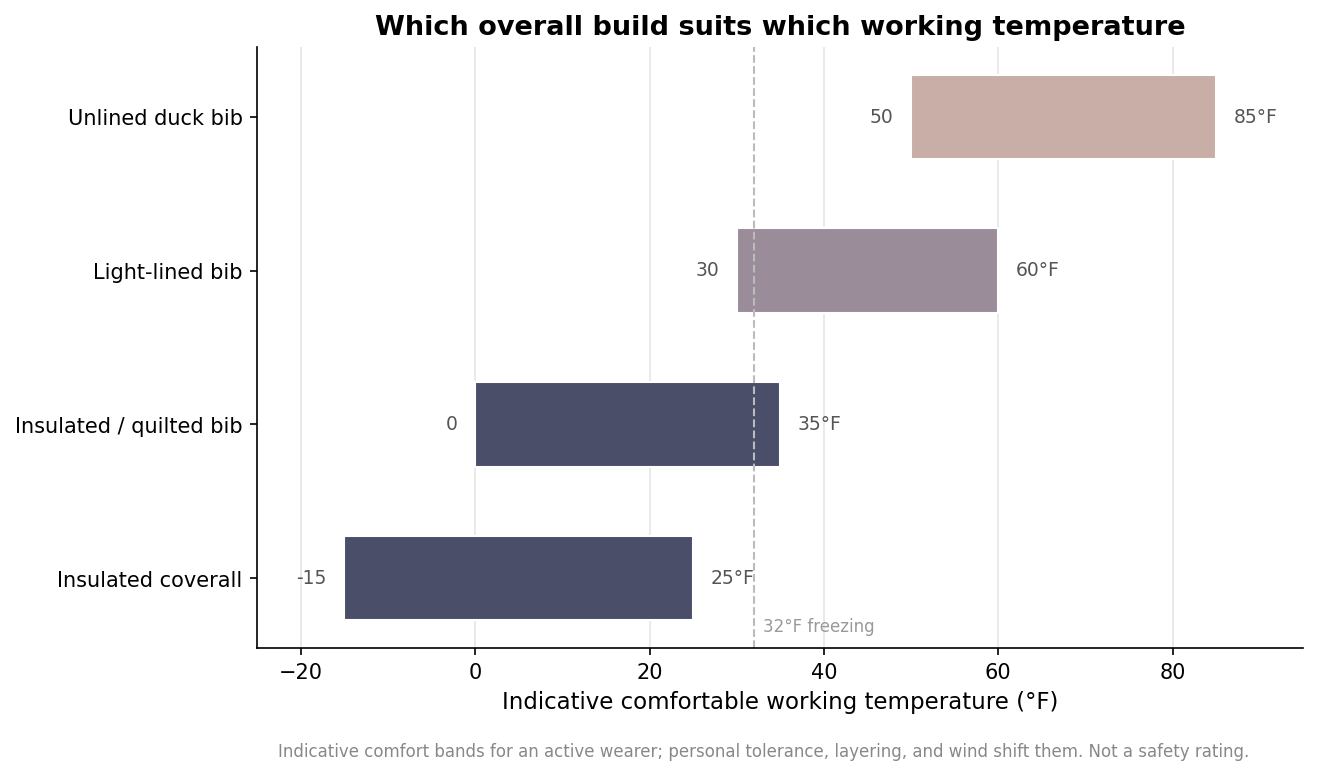
Temperature comfort ties back to build more than to any single feature. The chart below gives indicative comfort bands for the common builds, from an unlined duck bib in mild weather down to an insulated coverall for deep cold, so you can pick a lining before you pick a color.
Choose a decoration method that survives the work
This is the step most first-time buyers underestimate. Heavy cotton canvas and denim are natural fibers, which means the full-color dye-sublimation printing used on polyester sportswear will not bond to them at all. For workwear the durable options are embroidery, screen printing, and applied patches. Embroidery is the toughest and the classic choice for a company name or logo on the bib, since stitched thread outlasts the garment itself and reads as professional. Screen printing suits larger, flatter graphics such as a big back design, though it wears faster on abraded work surfaces. Woven or leather patches, sewn or heat-applied, give a rugged branded look and hide wear well. For a logo that will be scrubbed, snagged, and washed hundreds of times, embroidery on the chest panel is almost always the right call.
Plan quantity, sizing spares, and lead time
Custom apparel rewards ordering the whole need at once. A logo setup, whether an embroidery digitizing file or a screen, is a one-time cost that spreads across the run, so a larger order lowers the per-unit decoration cost and guarantees every garment matches. Build in spare sizes: crews change, and a few extra pairs in the common waist sizes save a rush reorder when someone new starts. As a market reference point, a quality canvas overall such as the widely available AS Colour 5980, offered in colors like black and walnut, retails around the $160 mark before decoration, which sets a realistic expectation for a durable garment versus a disposable one. Confirm your supplier’s production lead time in writing, since custom decoration and full size runs commonly add one to several weeks on top of blank-garment stock, and order early enough that the overalls arrive before the season or the job that needs them. Nail the style, the fabric weight, the measured sizes, and an embroidered logo, and a single order will keep a crew in branded overalls for years.
Leave a Reply